
Redefining Courage. Redefining Strength... To Feel Again!
[ An exploration of the male experience of depression (and recovery) ]

Content warning: This piece opens with a graphic description of impact play in a consensual BDSM context.
{ In case you’d prefer to listen… }
Preamble
Kickstarting 2026 with another draft chapter from the book I’ve been working on, Feminism Will Make a Man Out of You!. This chapter is particularly close to my heart and describes one of three experiences with conscious kink that, in many ways, changed my life.
I’m learning so much about writing creative nonfiction and self-help, and always grateful for feedback! What lands? What resonates? What connects and what doesn’t? I’d love to hear from you!
Chptr 8: To Feel Again (Redefining Courage. Redefining Strength)
The Wail | The Nature of Violence | Redefining Courage. Redefining Strength. | Vulnerability is Not Weakness | Nobody Makes Us | The Onion and The Work. | Fear of Flying | My First Time!
The Wail
Two fists. The slap of knuckles on flesh.
The sound reverberates through the room – echoes against the hard surfaces of my heart.
Waves of pressure and impact. An insistent rapping against my defences.
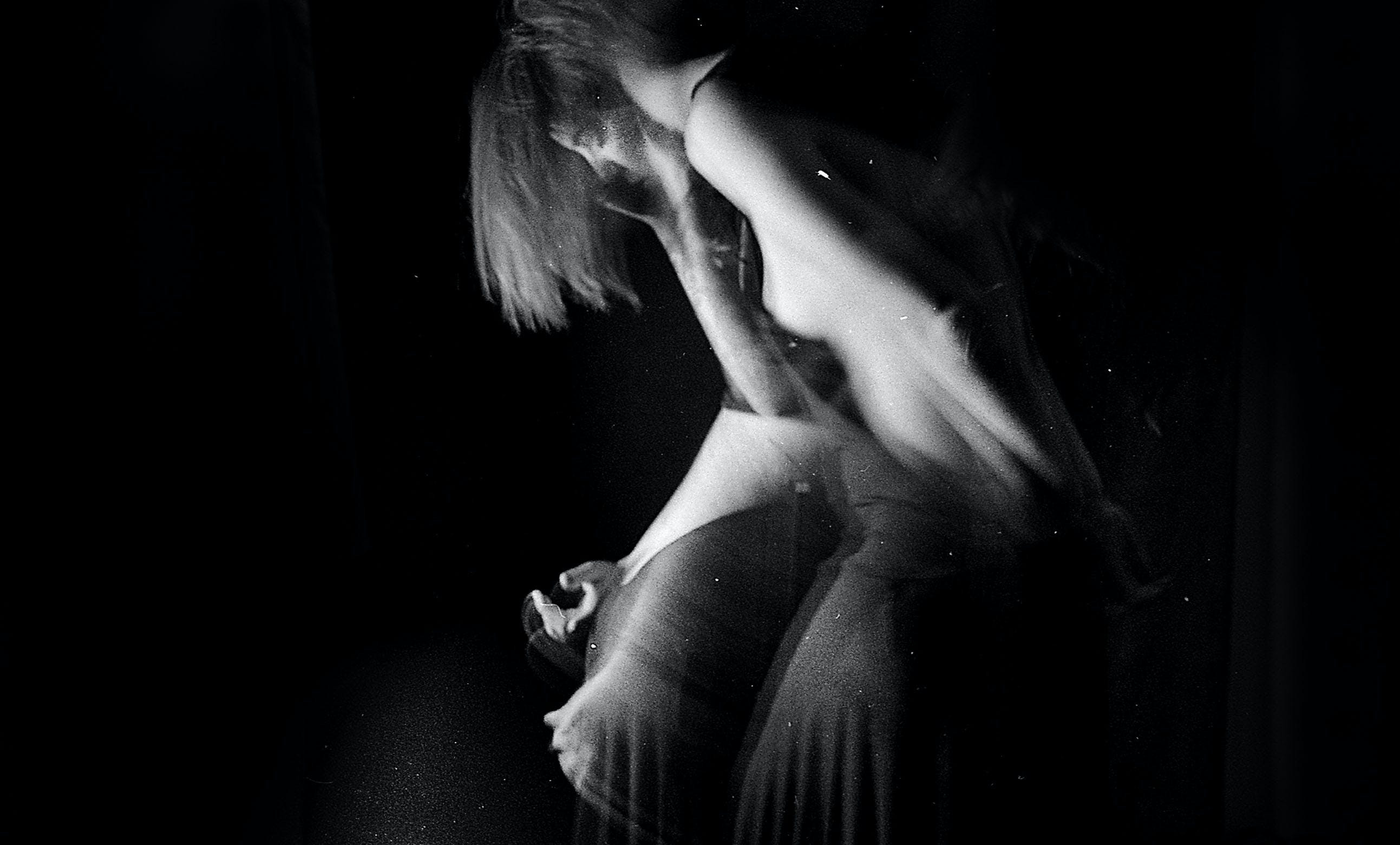
Another hit – square between my shoulder blades. And I break. Something akin to a shell of desiccated clay around my heart fractures and crumbles away.
The wail arrives, unbidden. Up through my gut. It comes – an animal sound I don’t recognise as my own escapes my lips.
My face grotesque in a distorted howl. Liquid seeping from every hole.
Tears. Sweat. Spit. Snot. Drooling against the distressed leather of the cross I had been tied to.
This was not the beating I was expecting!
I’d heard that impact play1 could be a cathartic experience. I’d heard it could be a ritual of sorts, not far from the “mortification of the flesh” once such a large part of Christian history and devotional practice – a way of connecting with something bigger than ourselves.
But this…?
I feel Sir press her whole body against me, her heart beating against mine, breast-to-back. I can’t see her, but I can feel her presence.
She’s there with me…
Completely!
I’m dropping through layers. Through earth, through stone. As the grief wells, I can see more rising up to meet me. I keep falling, careening through ever deeper levels of rage and despair to the molten core of me.
But I also feel held like I’ve never been held before.
I felt so small, half-carried to the candle-lit bath she had poured for me. And later, wrapped in blankets, held, still, convulsing from the experience, the letting go.
Later, as I dress, fingers fumbling with buttons too large for holes, laces escaping my every effort, I look up to see her in the doorway, gazing at me, reflective.
“I think I know now what courage really looks like”, she says.
The Nature of Violence
Remember when I opened Chapter 4 with “Man Up”? It’s a military call to arms – an order from an invisible authority barking, nay screaming in your face, spittle freely spraying.
Pull yourself together, soldier! This is a matter of life or death! Tighten your belt, stand up straight and raise that chin (a classic tell, by the way, for someone who’s dissociated and disconnected from themselves).
You’re gonna have to toughen up to face what’s coming!
It’s how we train soldiers to normalise violence. If every ounce of sensitivity and empathy can be beaten out of you, then and only then can you be strong enough to extinguish another human life.
Men tend to think of violence as physical harm inflicted by one person or group on another. But feminism helps us see how violence operates on so many more subtle levels.
It starts with the threat that keeps people in their place (often in the context of domestic violence, where the threat long precedes the physical harm), but extends to any act or behaviour that curtails another’s rights or freedoms.
Anything, in fact, that causes physical, sexual, psychological, social, political or economic harm to another human being can be thought of as a form of violence.
As I try to make sense of it, I think it might be more accurate to think of violence as a kind of energy. I know that sounds woo-woo, but try to think of it more as the impulse that provokes us to action. It may or may not express itself physically, but to the person on the receiving end of it, the harm is most definitely real.
Framed that way, it becomes easier to see that we engage in violent behaviours every day!
With every judgmental thought, with every spoken criticism or put-down, with every unconscious racial slur, we demean and destroy those around us; we extinguish a tiny part of each other simply through every unconscious thrust of aggression. You don’t have to be a soldier in the arena of war. Given time, the tiny cuts we inflict on each other have the same effect.
It can be incredibly subtle, too: Throwing our proverbial weight around in a meeting. Interrupting others. Talking over them. Forcing one’s views onto another – even when we know we’re wrong – to avoid embarrassment, or simply because our own sense of self-importance (the belief we’re somehow better than the next person), won’t allow us to listen or hear another point of view.
Is this really strength? Is this what having power is really about? For me, true strength is knowing the power you hold and wielding it with care and respect for others, able to convey that power by being your most grounded, clear and present self.
Redefining Courage. Redefining Strength.
From this place, you don’t have to prove how strong you are to anyone! It looks like not needing to speak in a meeting till everyone else has shared, and only then adding your voice if there is something left to say. It’s about feeling secure enough to be able to take a step back and see the bigger picture.
Having to prove yourself immediately gives away your sense of insecurity. I’ve come to understand that the effort to prove our strength is a form of acting out. It’s a performance: Look at Me!
I want to say it’s childish and immature, but that’s a classic judgment to make about childhood – an example of shaming as a way to clip a child’s wings. But I also have to remind myself that it’s a coping mechanism too.
The contradiction is that, as kids, we had to prove ourselves in the eyes of father figures, gangs of boys and playground bullies. We had to, to survive! In the wild, no single member of a pack will survive for long if ostracised from the group. But a part of us still thinks we’re stuck at that age, and in that moment, in a state of fear and survival.
It’s much harder to develop the inner strength to look inside, open, experience, and feel. That includes all the difficult feelings of sadness, of rage or abandonment that might come up for us; all the realisations, all the recognitions.
To face our inner selves and our shadows head-on requires a Herculean level of personal strength.
To face up to and take responsibility for all the pain we have experienced, and all the hurt – the emotional or physical violence – we have inflicted on others, takes strength without compare. To lean into and accept how fucked-up we are is like bench-pressing our own weight several times over.
But just like weight-lifting, we have to grow that muscle too, but too much, too soon, and we’ll tear an injury before seeing any of the benefit.
Collectively, we need to engage in a process of ruthless self-reflection and, in so doing, redefine our understanding of strength.
But it also means leaning into those fears and vulnerabilities with what the Tibetan Buddhist master, Chogyam Trungpa, would describe as a combination of “bravery and unconditional friendliness”.
We might also know that simply as self-compassion.
[ Doing courage differently ]
How do you wield your power?
How do you show your strength to the world? Your bravery and your courage?
How aware are you of the effects of your words and actions on others?
It might be in your mind a bit of harmless fun, but if you slow down enough, do you notice the response if you say something racist or sexist to someone? If you do, what do you do with that? Do you think to yourself, they’re being oversensitive? That they can’t take a joke? Is your take that this is just another over-sensitive wallflower who needs to toughen up?
Just like you had to…?
Or is it possible to take that breath, to soften inside, and in some way recognise the human being in front of you?
If you could do that, might you have a different response to them?
When you know you’ve said or done something wrong, how is it for you? Are you able to apologise? Make amends? Repair the connection between you? Because that’s what it is. It’s about making the choice, to do things differently, so you can connect with another human being rather than make the distance between you bigger.
Vulnerability is Not Weakness
Authenticity and vulnerability are so closely linked, hand-in-glove, that one doesn’t really exist without the other.
And both strike fear into the hearts of most men. Why is that?
It’s a stumbling block because authenticity and vulnerability are precisely the qualities we need to really connect with others.
I’ll come back to this in Part III, but for now, I just want to say that they are both qualities we need to flourish in any relationship, whether on a first date or in a long-term commitment. And “relationship” includes family, friendships, and even work colleagues – anywhere where we are relating to, or with, another.
And yet vulnerability is terrifying for most men, primarily because it is equated with being vulnerable, which suggests that one’s survival may be at risk from those more powerful. And in a world of power-over relationships, that means other men.
We learnt pretty quick about the dangers of weakness in the school playground when we were young. Any show of it and we could be jumped. Beaten up at the school gates, or trolled online.
So in the distorted worldview that we men have been brought up to believe is normal, vulnerability becomes synonymous with weakness. They are one and the same.
And God forbid we are ever seen to be weak!
Our entire masculine identity is based on a notion of rugged individualism, personal strength and stoicism – existing without needing others.
Yet this belief is exactly what leaves us feeling so isolated and alone in our lives and desperate for connection, willing to do whatever it takes to numb ourselves from the pain of it.
It feels complicated to write about, as I’m immediately questioning the judgments we make about weakness. That strong equals good, and weak, bad. In saying “vulnerability is not weakness”, I might simply be slipping into another false binary of vulnerability equals good, but weak still bad.
So why do we see weakness as a problem at all?
Part of it is that we tend to think of these as fixed states when in fact they’re relative. The older I get, the less physical strength I have, and the more I see my mental faculties becoming slowly compromised.
But why should that condemn me to being of less value than I was when I was younger? Why is it that I feel shame when I have to reach out to others for support for things I once took for granted? Am I worth less as a human being? I know I have more to offer – more experience and more wisdom – than at any previous point in my life. So, who or what gets to define strength or weakness as being good or bad?
It’s simply relative. In some ways, I feel weaker than I used to, and in others I feel stronger. But even then, so what?
Either way, I no longer see it as a risk to my personal value or well-being.
[ What does “vulnerability” mean to you? ]
What do you understand vulnerability to mean?
What messages did you receive about the relationship between vulnerability and weakness?
If you think back over your life, can you start to separate experiences of weakness from those of vulnerability? How might they be different?
And how do you feel towards the idea of weakness? What does “being weak” mean to you? What compassion do you have for what you might think of as weakness in yourself?
Importantly, how do you feel towards others whom you deem to be weak? What distinctions and judgments do you make? And why?
And after all that, might there be a different way for you to think about strength?
Nobody Makes Us!
In our relationships, our fear of feeling can often be seen when, typically, the man in the relationship slowly pulls away from connection. We’ve seen how society supports this process of distancing, with deadlines at work, pressures to be successful in careers, and predominantly male but surface-level friendships to maintain.
It’s so easy to withdraw into our shells – a space where we can protect ourselves and feel safe – but at the risk of increasing loneliness – increasingly resentful toward our partners for not magically making us feel better.
But it’s worth noting that no one “makes” us feel that.
Just stay with that for a moment, would you? Let that sink in.
No one “makes” us feel anything!
It’s become such a part of the language that we use that we take it for granted. It’s common sense, right? She did such and such, and “that made me really angry”. Or he said that thing “that made me really anxious”.
It took me years of therapy to really get this, but it’s true. Ultimately, it’s our choice how we respond to something someone else does or says.
If someone does something that feels hurtful (I’m talking feelings here, not physical abuse), and we feel a reaction, that’s something inside of us that’s been triggered. It might sound like a big thing to claim, but that’s a trauma response right there. In that moment, it might not feel like we are choosing anything – our feelings appear out of nowhere, and take us over – but they are still our feelings, and ours to work through.
Everyone seems to be getting “triggered” these days. It has me feeling like I have to tiptoe around on eggshells so as not to trigger someone. But I find the visual metaphor of a gun to be really helpful: The trigger itself is just one small piece of the bigger mechanism. It’s the gun that’s locked and loaded with ammunition, primed and ready to go off.
It took a long time for me to understand that I needed to own my shit and take responsibility for my feelings.
Coming back to relationships, sometimes it just looks like we’re relating and making the effort to, but still finding ourselves with a sense of an inner void or emptiness.
That’s classic people-pleasing right there; doing and saying what we think our lover or partner wants to not scare them away. We have to learn to feel our feelings, not run away from them, or explode them all over someone else.
We also have to learn how to own them and take responsibility for them.
That means learning how to process our feelings (which means being able to sit with the discomfort of our emotions till they’ve passed through us, and/ or transformed into a different, less upsetting state), and to learn how to ask for any wants or needs we might have in relation to them.
Asking is different from feeling entitled to take.
We might imagine asking to be the weaker response, but as we’ve seen, that’s bullshit anyway. Here, asking means having the courage and the strength to say; This is what I’m feeling, and this is what I want and need to change that feeling.
Asking means we understand we won’t necessarily get what we want, but it’s so much more effective than trying to take.
Hold your horses for a deep dive into the world of communication and consent in Part IV. For now, simply knowing what we’re feeling (and so what we might want or need in response), is no small task already. I so wish there was an instant cure or solution.
The Onion and The Work
I’ve been working on reclaiming my ability to feel for years already, except that every time I think I’ve achieved a certain level of healing – letting go of the shame and taking apart the beliefs and behaviours that I’d learnt as coping and survival strategies – I realise there is always another layer of the proverbial onion waiting for me. Seems there’s always more yet to excavate and unlearn.
I’ve met a ton of spiritually-minded, “conscious” men who seem to think they’ve healed these parts of themselves, but I’ve learnt that there is always more, deeper, waiting to be uncovered.
It’s never-ending!
Don’t kid yourself if you think you’ve done the work; been there, and done that. Because of how deeply hurt we’ve been as children, shit just goes underground – all those tender and vulnerable parts we fear might be seen go deeper still, throwing up occasional decoys to put us off the scent.
But it’s not about coming back to some impossible idyllic state. It’s more about the effort and the graft we have to put in to get there. That’s why it’s called the work!
“The Work” just happens to be the name of an incredible documentary, made in 2017, about incarcerated violent inmates of Folsom Prison in the US, and what it looked like for them as they stepped into a process of group therapy together. “The most powerful group therapy session ever caught on camera” is how Indiewire described it. If you want to know what real courage looks like, watch this!
The question is; are we leaning into the work we need to do, or turning away from it?
I remember when Roe vs Wade was overturned in the U.S. – the outpouring of shock and disbelief from all my female friends and those assigned female at birth (AFAB’s) – and the equally shocking silence from the men in the conscious circles I was engaging with. These were men who would have clearly said, in person, that they fully supported women’s rights to autonomy over their bodies. And yet, when shit got real, there seemed to be a reluctance to say so; to stick their heads above the parapet.
I was full of all kinds of judgment, until I had to stop myself and acknowledge that my judgment toward other men was simply hiding something deeper – my own passivity, born of fear – the fear of not knowing what to say, or what to do in the face of something that felt so egregious.
So I tried owning it instead. I wrote a post that simply said, “I feel frozen and unsure of what to do. If you’re a man, and also feel confused about what to do or say in this moment, let’s get together and talk through our fears and concerns – let’s find a way through this together”.
That was me, leaning in, acknowledging my feelings of anger and fear, but claiming them and reaching out to others for support.
Fear of Flying
Feeling my feelings? It wasn’t the first time, like losing my cherry.
I came into the world knowing how to feel it all – joy, fear, pleasure, fear – I didn’t have to do anything to feel. They were emotions I was born with, pure and unadulterated.
That’s how it was for all of us the day we emerged from the womb, blinking into the light. But the messages we’re given come so quick, and the disconnect so utterly effective, that we grow up thinking that feelings aren’t even available to us. Women get to have feelings because they’re so different and distant from us, like Venus is from Mars.
So the first time we do get to feel anything other than the anger we’ve been allowed, can come as a real shock.
For many, that comes with a crisis of some kind that knocks us out of our complacency, the death of someone close, where sadness, grief and anger come in waves that completely overwhelm us. For others, the crisis might look like hitting rock bottom, when our ego finally surrenders – another kind of death – just long enough to not give a shit what anyone else thinks, and when our screaming inner child won’t be silenced anymore.
For the men who can’t allow themselves to feel, even then, the result can be either an explosion or an implosion, where escape becomes the only solution, or suicide a blessed relief.
But it also doesn’t have to get to that crisis point, or that fever pitch. All you have to do (as though it’s that easy) is to let the feelings come – to allow them to rise and move through you. It’s hard because we’ve been taught that we’ll be overwhelmed by our emotions – that we’ll lose ourselves in them.
The truth is that feeling is exactly how we do find ourselves. If we can allow ourselves to really feel them, then they dissipate and move on through. It’s the resistance to them that makes them feel so big and overwhelming. But the more you allow yourself to feel, and the more you really get that the feels can go as quickly as they come, the less fear there is about going there.
You have to titrate it, though, to build your capacity over time, like a chemist’s pipette adding a drop at a time into a test tube of unstable chemicals.
My First Time!
For me, it started with movies. I loved films, and I had a thing for arthouse flicks, especially French auteurs (I was such a snob!), but I really connected with films like “Betty Blue”, for the overtly free and open sexuality the film opened with (and less for the mental ill-health and suicidal depression it ended with). But the theme of love and disconnection hit me hard. The first time I watched that film, I could feel the tears rising, and did everything I could to keep them down, swallowing hard, confused at the overwhelming sensations bubbling inside.
But why? The resistance was making me feel nauseous, acids and metals lining my mouth.
Why was I holding on to it?
A whisper from somewhere reminded me: You’re alone. There’s no one here to see you, or to judge you!
The dam broke, and the tears flowed.
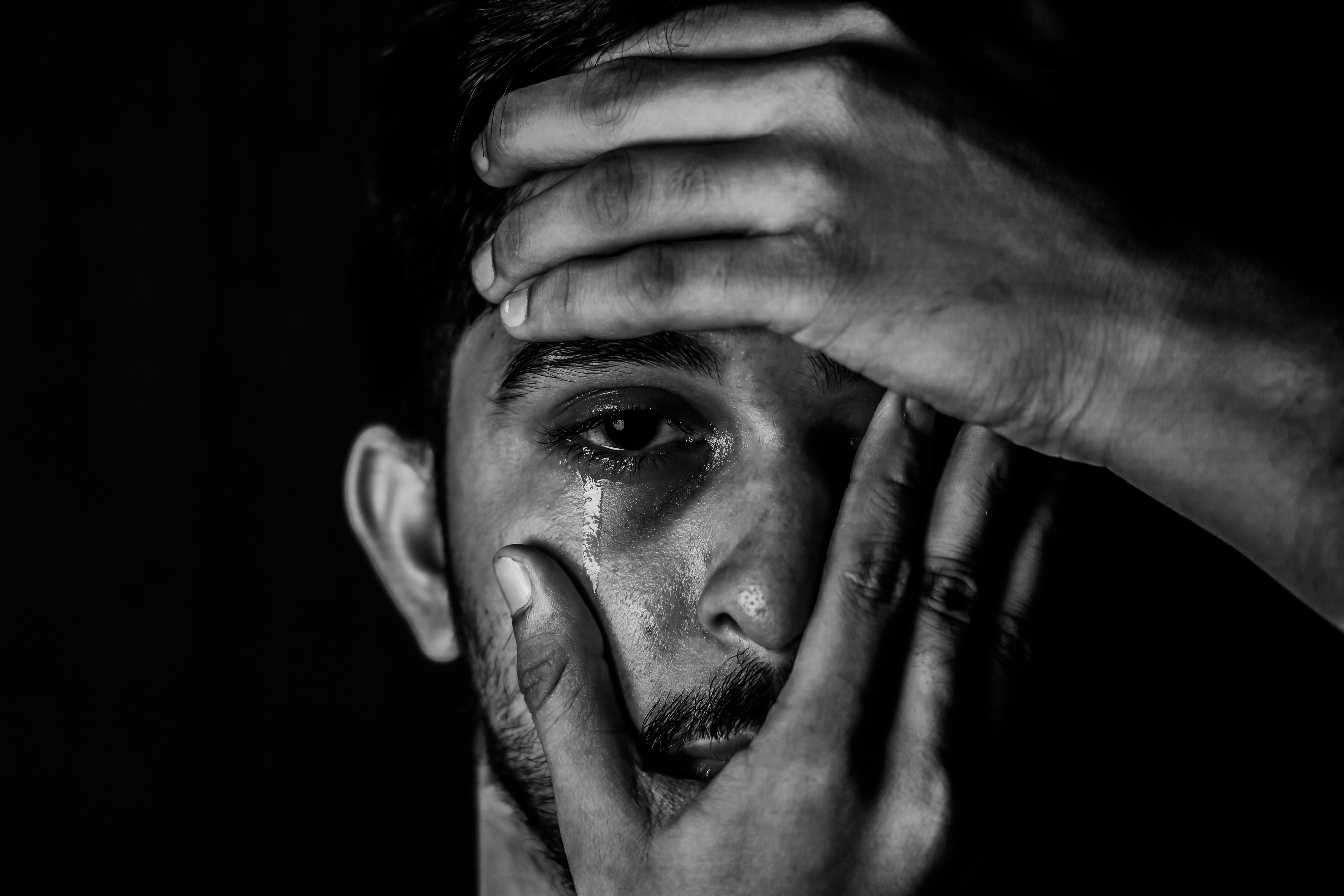
And it was okay! The feelings passed. The resistance had been more painful than the feelings themselves. I’d been wound up like a spring, and now here I was, in a strangely relaxed state, with myself and my bruised heart, but feeling me in a way that felt new to me.
Another wave welled up in me as I also recognised the truth of that moment…
Yeah, I am alone!
And again the feelings came up and passed through, more quickly this time as I had no resistance to them.
I allowed myself to feel in private, learning how to notice the physical sensations in my body, becoming familiar with them, so that they wouldn’t overwhelm me.
The point was that I survived! What initially seemed too big – too overwhelming and too powerful to go toward – became part of what helps me now not only survive, but grow and prosper in this world. The emotions that seemed too scary to really feel became my foundation for knowing myself.
Still, it took a good few years before I risked allowing anyone else to see me being open with my emotions. It took time to find the friendships I felt I could trust, with people who had earned the right to see this side of me.
And then the strangest thing happened. For perhaps the first time in my life, I didn’t feel alone!
These days, I cry at the drop of a hat, feeling the emotion rush up from my belly and catch for an instant in my throat. I weep openly without shame. It can be an interesting barometer, instantly recognising when a movie or TV show has deliberately manipulated my feelings, but also recognising that there were feelings there that needed an out, and grateful for the relationship I have with them now.
When the tears flow, I feel the connection to my heart. As the sobs wrack through me, I recognise the grief well up for all the times I couldn’t feel. I don’t wail or wring my hands, but I will sit there and feel the tears run down my cheeks, and feel thankful for them.
I can see you through clear if reddened eyes, ready to be seen by you in turn.
[ Accessing your feelings ]
How easy is it for you to access your feelings?
When you go there, do you feel numb? Or do you feel easily overwhelmed? Are some of them easier to feel than others? And which are more difficult?
Have there been moments in your life when you felt more open to feeling your emotions? Where were you? What were you doing? It can be helpful to recognise those signposts to what might help.
And reflecting on the people you spend your days with (work colleagues, friends, partners, even), do you feel safe to share your emotional self with any of them? Some people in your life might really welcome getting to know you at this deeper level. Some might not – other men might feel especially challenged by it.
If you don’t feel safe to, that might be the start of an interesting inquiry. How much of that is you, and how much the people you surround yourself with? I’m not judging, just accepting that some people can meet us where we’re at, and some can’t.
Just remember that everything we feel shows up in our bodies, somewhere, somehow. The embodied experience of contracting with fear or opening with love is what we’ll explore next.
Outro
I really hope that sharing my story and my learnings resonates. I don’t claim to have all the answers, and I know there’s plenty I don’t know! Feedback is so very welcome. I’d love to hear your thoughts and responses.
“Impact play” – the term used in the world of kink and BDSM to denote the impact of a “toy” or body part against another body